
Why Your Espresso Channels: Five Causes and How to Fix Each One
The short answer
Espresso channels when water finds a weak spot in the puck and rushes through it instead of passing through the whole bed evenly. The shot runs fast, extracts unevenly, and tastes sour and bitter at the same time. In almost every case the cause is in the prep, not the machine: clumps in the grounds, an uneven or drifting dose, grounds lost over the basket edge, a tilted tamp, or a grind that is too fine. Fix them in that order — distribution first, tamp second, grind last — because each step can hide the one before it. This guide is for baristas and home brewers whose shots spray, run fast on one side, or will not repeat from one cup to the next.
Cause 1: Clumps in the grounds
Ground coffee clumps, especially from grinders that dose in a heap. Water cannot pass through a dense clump at the same speed as the loose grounds around it, so it goes around — and the path around the clump becomes the channel. The fix is the WDT: run a needle tool through the grounds before levelling. The Airflow magnetic WDT uses 8 needles at 0.4mm to break clumps up and even the bed, and it is the first fix to try because clumps are the most common cause. For how the WDT and the distributor divide the work, see Magnetic WDT vs Distributor: Which Puck Prep Tool Should You Buy First?.
Cause 2: An uneven surface
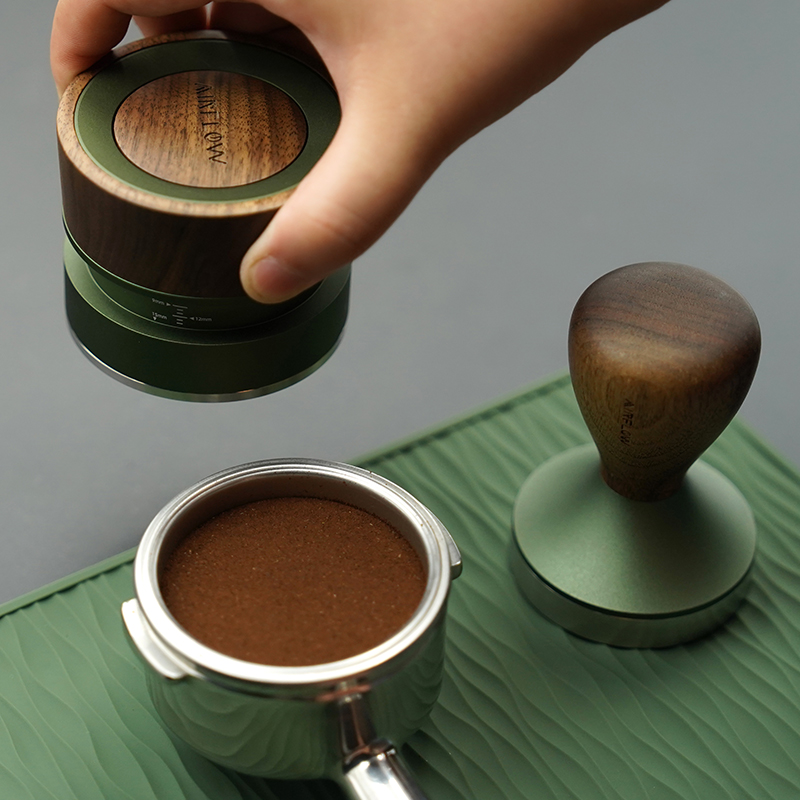
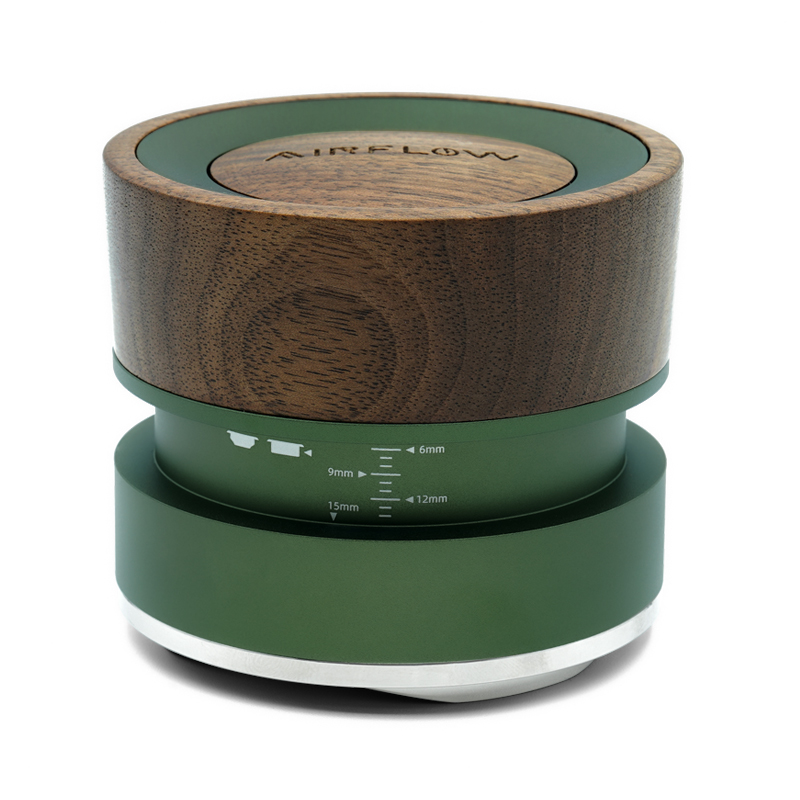
Even with clumps broken up, the top of the bed can sit higher on one side. The tamp then presses the high side harder, and water runs through the loose side. The fix is levelling before the tamp: the gravity-adaptive distributor — 58.5mm, with a 9-face plate, a 7.79° angle and 8mm depth — levels the surface to the same depth every time, which a finger or a tap on the bench cannot do repeatably.
Cause 3: Grounds lost over the edge
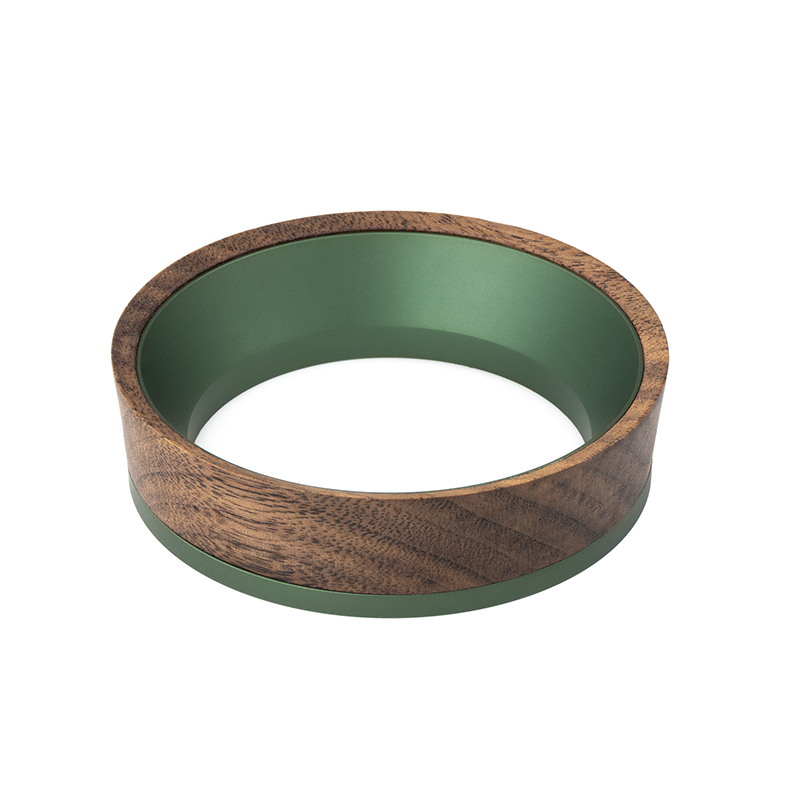
Part of the dose ends up on the bench during grinding and WDT, and the part that is lost is never even — one side of the basket loses more than the other. The shot that follows is brewed from a different dose than the one that was weighed. The fix is a dosing ring during grinding and WDT: the Airflow magnetic dosing ring has a 73mm wide opening and 6 magnets, holds on even when the portafilter is flipped, and keeps the full weighed dose in the basket. See How to Equip a Cafe Bar With One Espresso Prep Set for where the ring sits in the full station.
Cause 4: A tilted tamp
A tamp that lands at an angle compresses one side of the puck and leaves the other loose — a built-in channel. The fix is a flat surface and a level press: tamp on the bench, not in the air, and use a portafilter that sits flat while you press. The Airflow bottomless portafilter has a lay-flat design and its handle stays vertical even when tamping, so the basket stays level under the tamper. For reading the shot as it pours, see Airflow Bottomless Portafilter: How to Choose the Right Size and Use It Without the Mess.
Cause 5: The grind — check it last
A grind that is too fine chokes the puck: pressure builds, and the water forces a crack through the bed, which becomes a violent channel. A grind that is too coarse runs so fast the shot looks channelled even when the prep was fine. Check the grind only after the four prep causes, because bad prep makes a correct grind look wrong. Weigh the dose on a 0.1g scale and time the shot — the two numbers together say whether the grind is the problem. See Airflow Coffee Scale: How to Choose a 0.1g Scale With Timer for how to read them.
How to check, in order
Pull one shot and watch it, ideally with a bottomless portafilter, where a channel shows as a thin sideways jet. Then work down the list: WDT the grounds properly and pull again. Level with the distributor and pull again. Add the dosing ring and pull again. Tamp flat on the bench and pull again. Only then touch the grinder, one step at a time. Changing one thing per shot is slower than changing everything at once — and it is the only way to learn which fix actually worked.
FAQ
How do I know my shot is channelling?
The signs are a shot that runs faster than usual, a sour-and-bitter taste in the same cup, and — with a bottomless portafilter — thin jets spraying sideways or one side of the basket running while the other stays dry.
Is channelling a machine problem?
Almost never. Pressure and water delivery problems exist, but they are rare next to prep problems. Work through clumps, levelling, dose loss and tamp first; if a careful routine still channels on every shot, then check the machine.
Which single tool fixes channelling?
There is no single tool, because there are five causes. The WDT fixes the most common one — clumps — which is why it is the first buy. The distributor, dosing ring and a level tamp each fix their own cause.
The routine in one line
Channelling is a prep report, not a machine fault: break the clumps, level the bed, keep the dose in the basket, tamp flat, and only then judge the grind. The full step-by-step is in The 6-Step Puck Prep SOP for Cafes.
 OEM and ODM Coffee Tools: How to Private-Label Espresso Accessories
 Why Your Espresso Channels: Five Causes and How to Fix Each One
 Magnetic Dosing Ring: What It Does, How to Choose One, and How to Use It
Coffee Accessories Wholesale: How Distributors Build a Range That Sells