
Magnetic WDT vs Distributor: Which Puck Prep Tool Should You Buy First?
The short answer
Buy the WDT first if your shots channel, spray, or run fast on one side — that usually means clumps inside the puck. Buy the distributor first if your shots are mostly even but your tamp lands tilted, or if several baristas share one bar and the puck needs to look the same no matter who prepares it. Buy both when you want the full routine: WDT to even the inside, distributor to level the top, then tamp. The two tools do different jobs, and neither one replaces the other.
What each tool actually does
The magnetic WDT: fix the inside of the puck
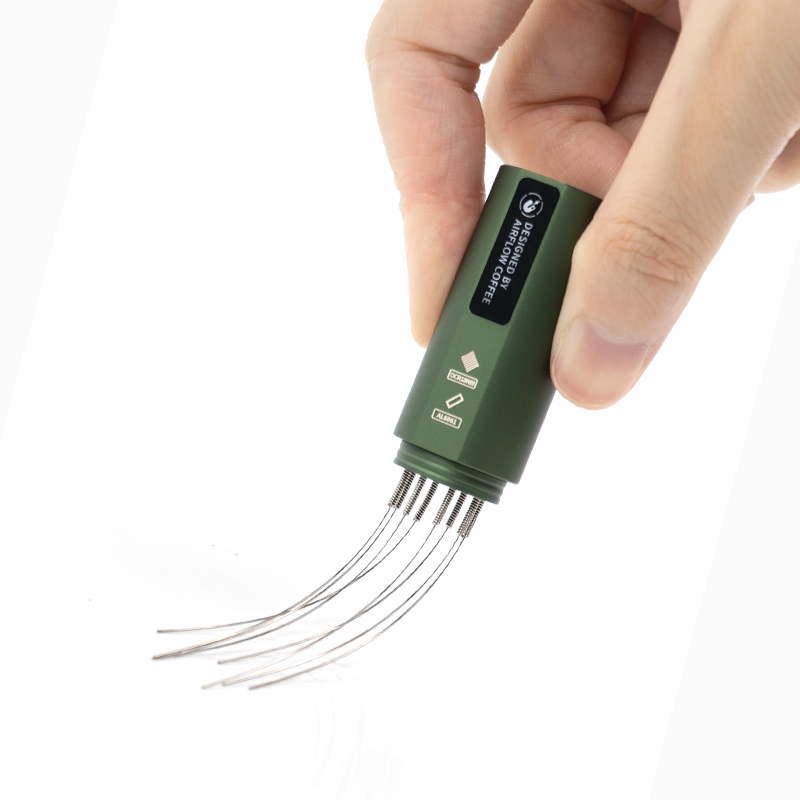
Ground coffee does not fall into the basket evenly. Static and grinder burrs leave clumps, and those clumps become dense spots in the puck. Water takes the easy path around a dense spot, so one part of the puck over-extracts and another under-extracts. That is channelling, and it shows up as a shot that sprays, blondes early, or tastes sour and bitter at the same time.
The Airflow magnetic WDT has 8 needles, each 0.4mm. A few gentle passes through the grounds break the clumps apart and spread the coffee into an even bed before anything is levelled or tamped. The needles are the point: they reach into the puck instead of working only on the surface. Use it after grinding and before the distributor. A few passes are enough — the aim is an even bed, not a stirred one.
The gravity-adaptive distributor: level the top of the puck
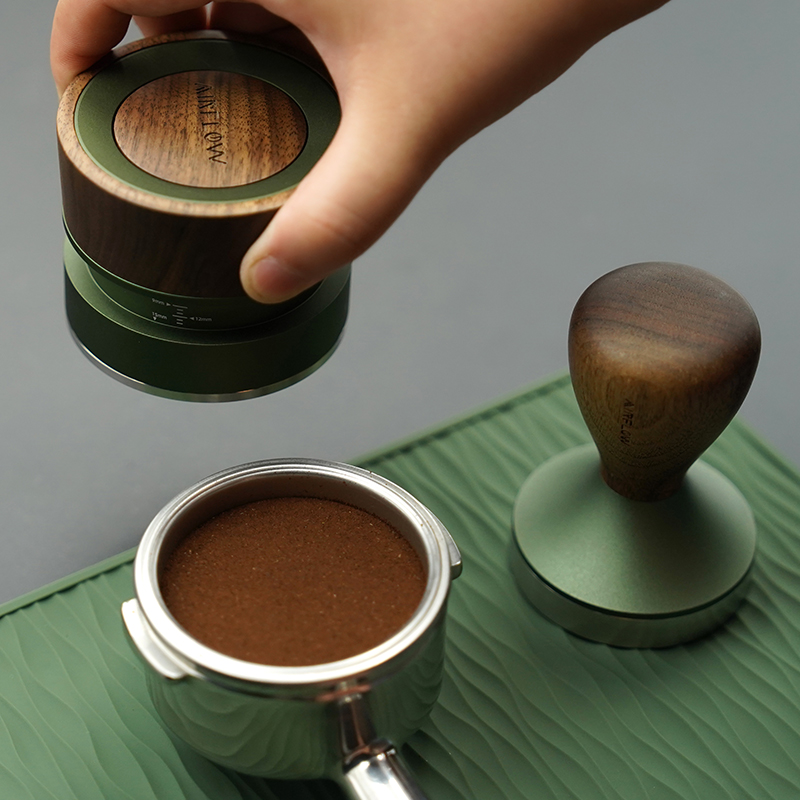
Once the inside of the puck is even, the surface still needs to be flat. A finger or a tilted tamp leaves one side higher than the other, and the tamp then presses harder on the high side. The result is the same uneven extraction, caused from the top instead of the inside.
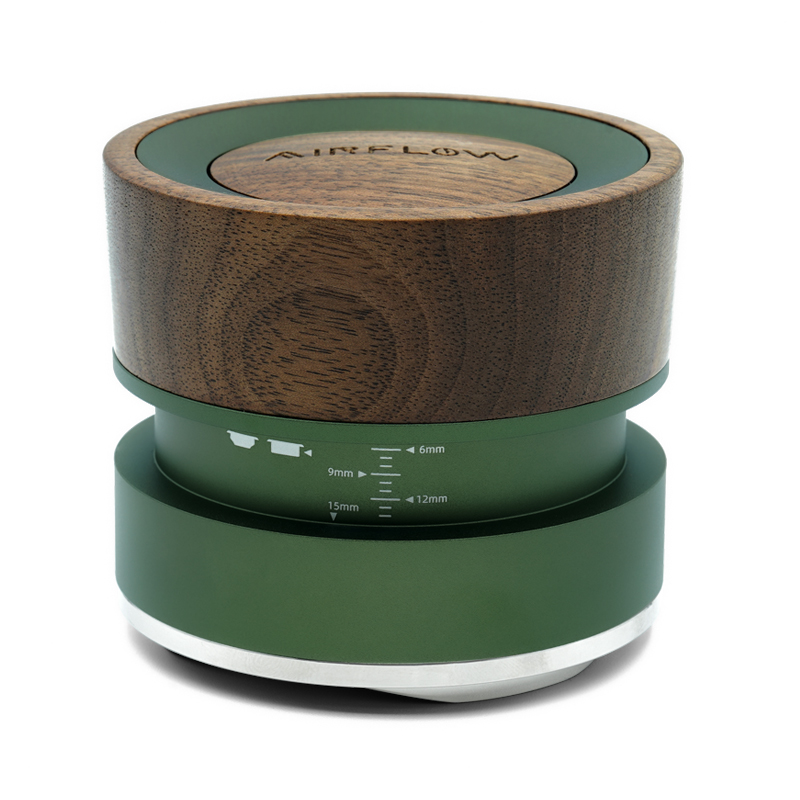
The Airflow gravity-adaptive distributor fits 58.5mm baskets, with a 9-face plate, a 7.79° angle and 8mm depth. It levels itself on the basket and evens the surface before tamping, so the tamp lands on a flat bed and channelling is reduced. Use it after the WDT and before the tamp. It is the step that makes the puck repeatable from one barista to the next, because the tool sets the level rather than the hand.
Side by side
| Magnetic WDT | Gravity-adaptive distributor | |
|---|---|---|
| What it fixes | Clumps inside the puck | An uneven surface before tamping |
| Key spec | 8 needles × 0.4mm | 58.5mm, 9-face plate, 7.79° / 8mm |
| When to use it | Right after grinding | After WDT, before tamping |
| Main symptom it solves | Spraying, fast one-sided flow, sour-bitter shots | Tilted tamps, inconsistent shots between baristas |
| Who notices it most | Anyone with a clumpy grinder | Cafes with several baristas on one bar |
Which one first? Three cases
1. Your shots spray or channel — WDT first
If the shot sprays from the bottom of the basket, runs fast on one side, or blondes well before the target time, the problem is almost always inside the puck. No amount of surface levelling fixes a clump underneath. Start with the WDT. Once the bed is even, the distributor has something flat to work on, and the tamp can do its job.
2. Your shots are even, but different every time — distributor first
If the shot runs well but the result changes with each barista, or your tamp keeps landing tilted, the problem is the surface. A distributor takes the hand out of levelling: the same tool, the same level, every shot. This is the case that matters most in a cafe, where three baristas share one station and the customer expects the same cup from each of them.
3. You are setting up a new bar — both, in order
For a new station, buy the pair and teach the order: grind, WDT, distributor, tamp. The order is the workflow, and the workflow is what makes the result repeatable. For the full six-step version of this routine, see our article The 6-Step Puck Prep SOP for Cafes, and for the complete station set, see How to Equip a Cafe Bar With One Espresso Prep Set.
Two tools people confuse with these
A dosing ring is not a distributor
The magnetic dosing ring fits on the basket while you work, with a 73mm wide opening and 6 magnets, and it does not fall off even when flipped. Its job is to keep the dose in the basket and off the counter. It does not level the puck and it does not break up clumps. It belongs in the same routine, before the distributor, but it solves a mess problem, not an extraction problem.
A tamper is not a distributor either
The tamper presses the puck down; the distributor levels it first. Tamping an uneven bed only presses the unevenness in harder. Level first, then tamp — that order is the whole point of owning a distributor at all.
How to use them together
Grind into the basket with the dosing ring fitted. Run the WDT through the grounds in a few gentle passes, covering the whole basket rather than stirring one spot. Remove the ring, set the distributor on the basket and let it level the surface, then tamp. The full pass takes seconds, and it takes the same seconds every time, which is what a busy bar needs: a routine that does not slow down under pressure.
Keep both tools at the station, not in a drawer. A tool that is not within reach during a rush is a tool that will not be used, and a puck prep routine only works when it happens on every shot, not on the quiet ones. Clean both tools at the end of the shift as well: wipe the distributor plate so old grounds do not stick to the next puck, and keep the WDT needles straight and protected, because a bent needle drags through the bed instead of passing through it.
What to check before you order
Check the basket first. The distributor in this guide fits 58.5mm baskets, so confirm your basket size before ordering — a distributor that does not match the basket cannot level the puck. The WDT has no basket size to match, which is one more reason it is the easier first buy for a mixed set of baskets.
Check who will use it. One home barista can learn either tool in a day. A cafe with a rotating team gets more from the distributor, because it removes variation between hands. A cafe with a clumpy grinder gets more from the WDT, because no levelling step fixes a clump.
Order one set per station. Sharing one WDT or one distributor between two stations during a rush costs more time than the tool saves. For distributors and retailers, both tools are available wholesale at a 1-carton MOQ per item, with samples available and most items in stock — the same terms as the rest of the espresso prep range. For the wholesale buying checklist, see Distributor Wholesale Buying Checklist.
Frequently asked questions
Do I need a WDT or a distributor?
Buy the WDT first if your shots channel, spray, or run fast on one side — that usually means clumps inside the puck. Buy the distributor first if your shots are mostly even but your tamp lands tilted, or if several baristas share one bar. Buy both, in that order, when you want the full routine.
Does the Airflow distributor fit my basket?
The Airflow gravity-adaptive distributor fits 58.5mm baskets. Confirm your basket size before ordering — a distributor that does not match the basket cannot level the puck. The WDT has no basket size to match, which is one more reason it is the easier first buy for a mixed set of baskets.
Can I use the WDT and the distributor together?
Yes — that is the intended routine. Grind, run the WDT through the grounds, set the distributor on the basket to level the surface, then tamp. WDT first, distributor second, tamp last.
The decision in one line
Clumps mean WDT first; tilted tamps and inconsistent baristas mean distributor first; a new bar means both, in that order. Either way, the tool is only half the answer — the routine is the other half, and the routine is grind, WDT, level, tamp, every shot.
 Coffee Accessories Wholesale: How Distributors Build a Range That Sells
 Airflow Bottomless Portafilter: How to Choose the Right Size and Use It Without the Mess
 Airflow Coffee Scale: How to Choose a 0.1g Scale With Timer for Espresso and Pour-Over
How to Test Espresso Tools Before a Wholesale Order: Samples, Trial Orders and the First Carton