
Coffee Accessories Wholesale: How Distributors Build a Range That Sells
The short answer
Start with the espresso prep chain, then add the pitchers and the scale, and only then add pour-over. The chain is the range that sells together: scale, magnetic WDT, dosing ring, distributor, and bottomless portafilter, in that order, because one sale creates the next. Add the 400ml and 600ml milk pitchers and the coffee scale next, since every milk-drink bar needs both. This range fits multi-brand distributors and equipment retailers who already sell machines and grinders, and it fits chains buying for their own bars. It does not fit bean-only roasters, whose customers buy beans rather than tools, or buyers looking for whole machines. At a 1-carton MOQ per item, a distributor can start with the chain and grow with demand instead of betting on a warehouse.
Step 1: Start with the prep chain
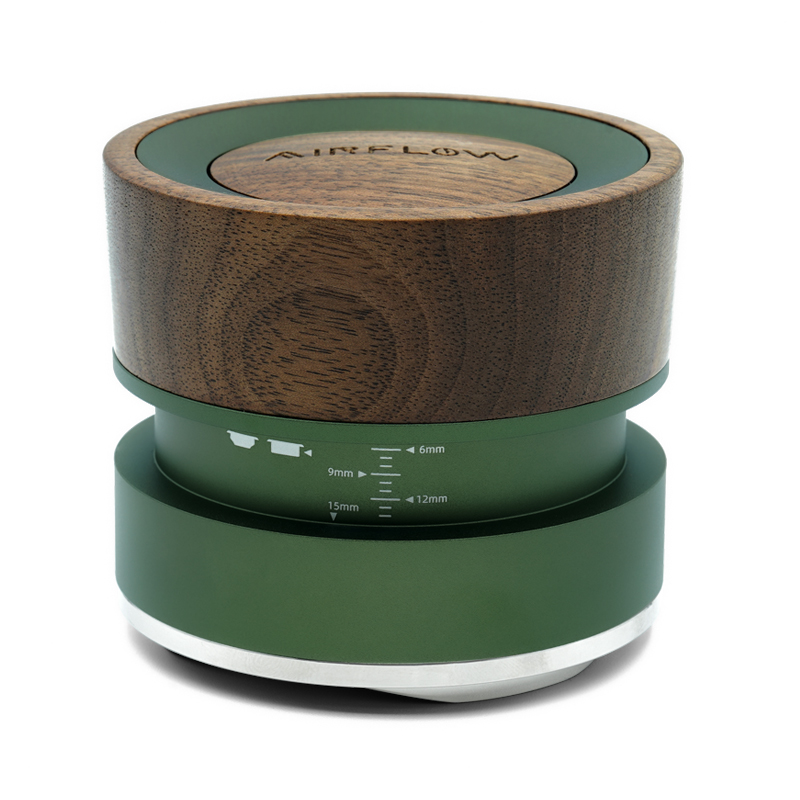
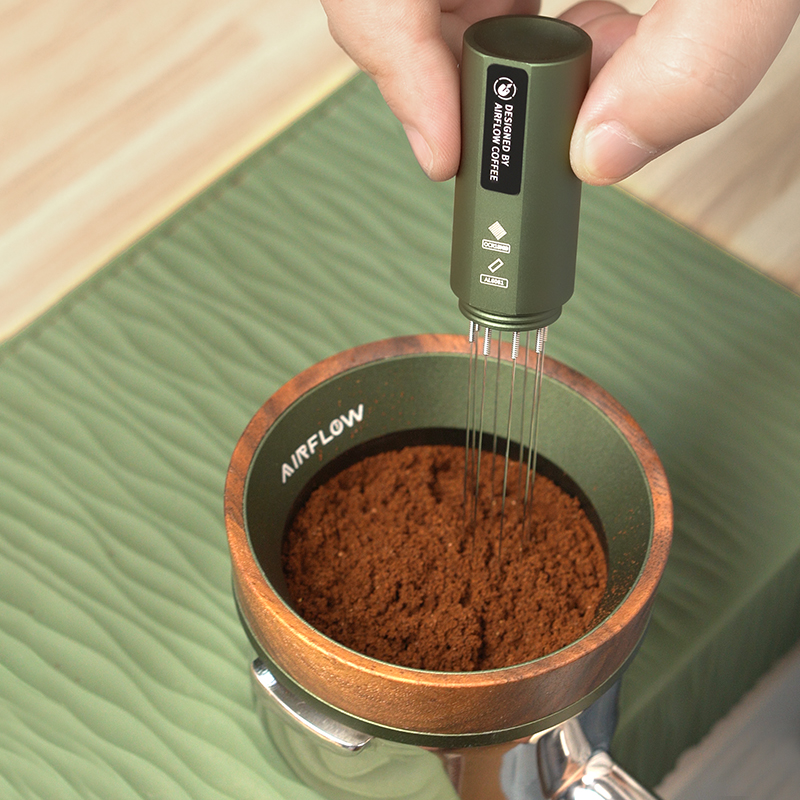
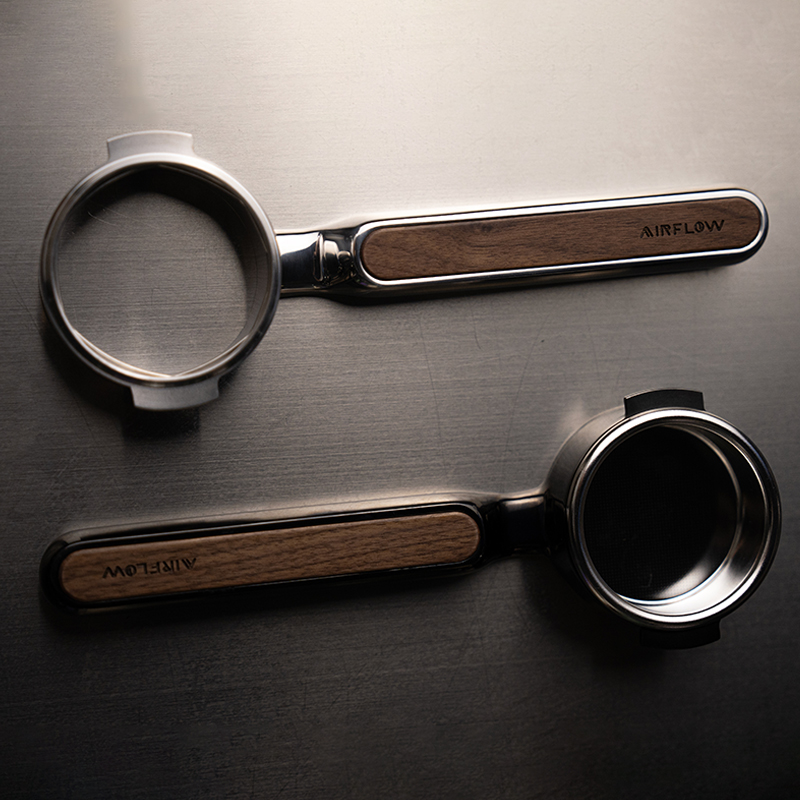
The prep chain is the core of the range, and it is the part every espresso bar needs. The order is the workflow: the coffee scale reads to 0.1g with a built-in timer, USB-C charging and three modes for pour-over, espresso and auto, so the dose is right before anything else happens. The magnetic WDT, with 8 needles at 0.4mm, breaks up clumps inside the puck. The magnetic dosing ring, with its 73mm wide opening and 6 magnets, keeps the dose in the basket while you work and does not fall when flipped. The gravity-adaptive distributor fits 58.5mm baskets, with a 9-face plate, a 7.79° angle and 8mm depth, and levels the puck before tamping. The bottomless portafilter, also 58.5mm, shows the extraction as it happens, so channelling is visible at once. The tamper, 58.5mm and 266g in walnut and 304 stainless steel, finishes the set.
Stock the chain as a chain. A customer who buys a distributor will soon need a WDT, and a customer who buys a bottomless portafilter will ask about the distributor. Each tool in the chain creates demand for the next one, and a distributor who stocks only one link in the chain sends the customer to a competitor for the rest. The chain is also the easiest range to explain: one order of work, five tools, in the order they are used. For the full set and the order to use it in, see How to Equip a Cafe Bar With One Espresso Prep Set.
Step 2: Add the pitchers and the scale
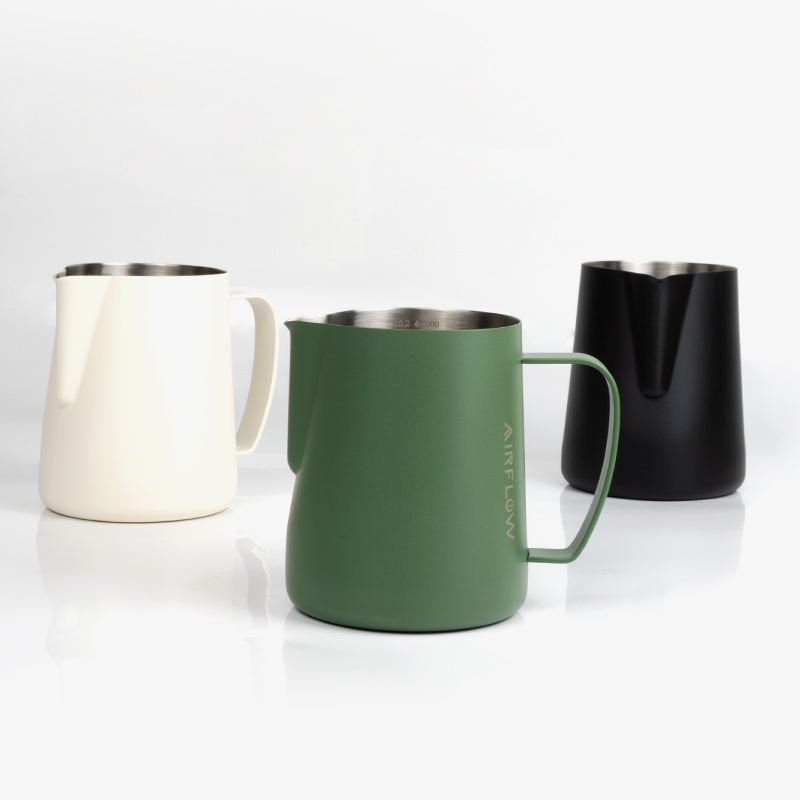
Once the prep chain is in place, add the milk pitchers and the scale — the two tools every milk-drink bar uses on every drink. The milk pitchers are 304 stainless steel, in 400ml and 600ml, in five colours. The 400ml pitcher is the everyday pitcher for a single flat white or latte; the 600ml pitcher covers a large drink or two drinks in one round. The coffee scale, at 0.1g accuracy with a timer, is the tool that starts the whole chain, and it is also the tool a pour-over customer buys first.
These two sell with the chain, not instead of it. A bar that buys a distributor still needs a pitcher, and a bar that buys a pitcher still needs a scale. Listing them beside the prep chain — pitcher next to the milk drinks, scale next to the grinders — puts each tool where the customer who needs it is already looking.
Step 3: Add pour-over last
Pour-over comes last, not first, because it serves a different customer. The stainless dripper, the pour-over kettle and the hand grinder belong to the manual brewing customer, and that customer shops differently from the espresso bar buyer. Add them once the espresso range is selling, and only if your market has pour-over customers — a distributor whose customers are all espresso cafes should not spend the first carton on pour-over gear.
The measuring spoon, at about 12g per scoop, is the small accessory that belongs with the pour-over set: cheap, useful, and bought alongside the dripper and the grinder rather than on its own. Small accessories like this are add-ons, not range builders — they ride on the back of a set that already sells.
How to avoid stocking accessories that do not sell
1. Do not stock a lookalike of something you already carry
Two distributors that do the same job, or two pitchers in the same size, split the same demand instead of adding to it. Before adding an accessory, ask what it does that the range does not already do. If the answer is nothing, skip it. A range grows by covering new jobs, not by repeating old ones.
2. Do not stock a tool your customers cannot fit
A 58.5mm distributor only sells to customers with 58.5mm baskets. Before ordering, check which basket size your market actually uses. A tool that does not fit the common basket in your market is a tool for a niche, and a niche tool should be a small order, not the first carton.
3. Do not stock a single gadget without its set
One WDT on a shelf, with no distributor and no dosing ring beside it, is a gadget. The same WDT beside the rest of the chain is a system. Customers buy systems more readily than gadgets, because a system answers a question — how do I equip this bar? — and a gadget only raises one: what is this for?
What to check before the first carton
1. Who the range is for
Multi-brand distributors and equipment retailers come first, then machine brands and chains buying for their own bars. Bean-only roasters and large whole-machine buyers are not the first market for accessories. Knowing who the range is for decides where the first carton goes and what the listing should say.
2. Basket size and compatibility
Confirm the distributor, the bottomless portafilter and the tamper fit the 58.5mm baskets your market uses. A range built on one basket size only works where that basket size is the standard. For the full buying checklist this guide builds on, see Distributor Wholesale Buying Checklist: How to Source Espresso Tools Without Costly Mistakes.
3. Own brand or OEM/ODM
Airflow sells under its own brand as the main offer, with OEM/ODM available. Decide before the first carton whether you are listing the Airflow brand or asking about a custom version — the conversation is different, and it is cheaper to have it before the order than after it.
4. The first carton, not the warehouse
Order at the 1-carton MOQ per item, and order the chain first. Most items are in stock, so a repeat order is fast, and samples are available if a tool still needs testing on a real bar. For how to test before committing, see How to Test Espresso Tools Before a Wholesale Order: Samples, Trial Orders and the First Carton.
FAQ
What is the minimum order for coffee accessories?
Airflow's wholesale terms are a 1-carton MOQ per item, with samples available and most items in stock. That means the first order can be small and focused — one carton of the tool that sold, not a warehouse of the whole range — and the range can grow with demand.
Should I stock the whole range at once?
No — build it in order. Start with the espresso prep chain, then add the pitchers and the scale, then pour-over if your market has pour-over customers. Each stage only makes sense once the one before it is selling, and the 1-carton MOQ means no stage has to be a large bet.
Do you offer OEM or ODM for accessories?
Yes — Airflow's own brand is the main offer, and OEM/ODM is available. Decide before the first carton whether you want the Airflow brand or a custom version, since the conversation and the listing are different for each.
The range in one line
Build the range in the order the bar uses it — prep chain first, pitchers and scale next, pour-over last — and let each sale create the next one, one carton at a time.
 Coffee Accessories Wholesale: How Distributors Build a Range That Sells
 Airflow Bottomless Portafilter: How to Choose the Right Size and Use It Without the Mess
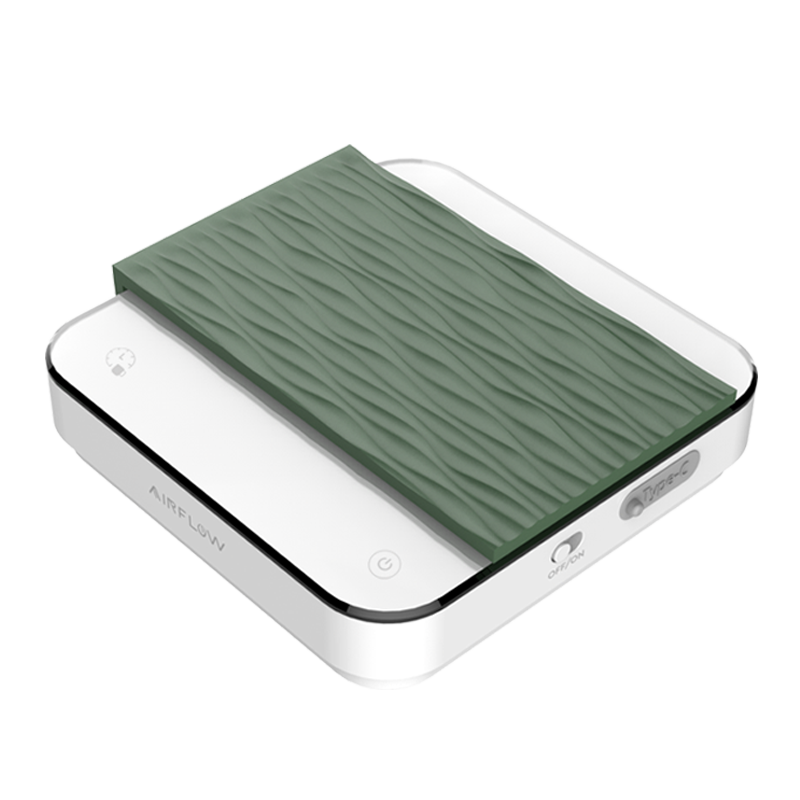 Airflow Coffee Scale: How to Choose a 0.1g Scale With Timer for Espresso and Pour-Over
How to Test Espresso Tools Before a Wholesale Order: Samples, Trial Orders and the First Carton