Airflow Coffee Scale: How to Choose a 0.1g Scale With Timer for Espresso and Pour-Over
The short answer
Buy the Airflow Coffee Scale if you weigh your dose and time your shots or pours, and you want one scale that covers both espresso and pour-over. It reads to 0.1g from 0.3g to 2000g, covering a single espresso dose and a full pour-over brew, and the built-in timer runs with the weight, so no separate timer is needed on the bar. It fits home baristas who want repeatable shots, and cafes that need one per station. It does not fit you if you need Bluetooth or an app: the scale has no Bluetooth and no app connection, and the intelligent LED display is the only readout. If you want shot data on your phone, this is the wrong scale; if you want weight and time on the bar, in front of you, it is the right one.
What the scale actually does
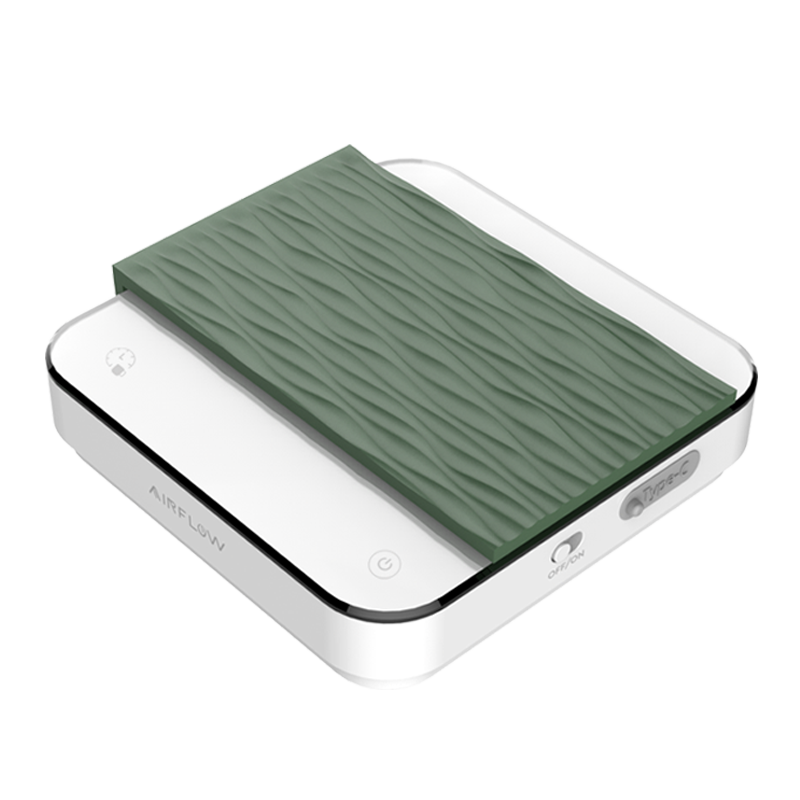
The Airflow Coffee Scale is a 104mm x 104mm x 20mm square, weighing 268g, with a tempered glass surface and an intelligent LED display. It measures from 0.3g to 2000g with 0.1g accuracy, so it reads an 18g dose to a tenth of a gram and still weighs a full pour-over carafe. It runs on a 500mAh lithium battery charged over USB-C, and it comes in white or black, with a rubber cover in dark green, light grey, or black.
The 0.1g accuracy is the number that matters most. A dose that drifts by a gram changes the shot, and a scale that only reads to 1g cannot show that drift. Weighing to 0.1g makes the dose repeatable from shot to shot, and a repeatable dose is what makes the rest of the prep routine — WDT, distributor, tamp — worth doing at all.
The three modes
The scale has three modes: pour-over, espresso, and auto. Pick the mode that matches the brew method, and the scale behaves the way that method needs.
Pour-over mode
Use pour-over mode for manual brewing. Put the dripper and cup on the scale, tare it, and pour. The weight shows the water going in, and the timer shows how long the pour has been running, so you can follow a recipe by weight and time together instead of guessing either one.
Espresso mode
Use espresso mode for shots. Weigh the dose into the basket on the scale, then weigh the shot as it pours into the cup, with the timer running. The two numbers together — dose in, liquid out, over a timed extraction — are what tell you whether the shot ran fast, slow, or right.
Auto mode
Use auto mode when you want the scale to run with less handling, for example when both hands are busy with the pour or the portafilter. The timer and the weight are still there, in the same display; the mode simply changes how the scale responds while you work. If you are not sure which mode to start with, start with the mode named after your brew method, and try auto mode once the routine is familiar.
How to use it for espresso
Put the empty cup on the scale and tare it to zero. Weigh the dose into the portafilter basket, then check the weight on the scale before grinding or after — the point is that the number is the same every time. Grind, WDT, level with the distributor, and tamp, as in the full prep routine. Then put the cup back on the scale, tare it, start the timer, and pull the shot. Watch the weight climb and the timer run together: the shot is done when the weight reaches the target, and the time tells you whether the grind was right. A shot that reaches the target weight too fast needs a finer grind; one that takes too long needs a coarser grind. The scale does not fix the grind for you, but it shows you, in numbers, what to change.
For the full prep routine this scale starts — WDT, dosing ring, distributor, pitcher, in order — see our article How to Equip a Cafe Bar With One Espresso Prep Set.
How to use it for pour-over
Put the dripper and the cup or carafe on the scale and tare it. Add the ground coffee and note the weight, so the coffee-to-water ratio is set before the water starts. Start the timer, pour the bloom, and watch the weight: the pour is controlled by the number on the display, not by the look of the water. Keep pouring in stages, checking weight and time together, until the target weight is reached. The timer matters here as much as the weight — a pour that finishes too fast under-extracts, and one that drags on over-extracts, and only the clock shows which one happened.
What to check before you buy a coffee scale
1. Accuracy and range
Check that the scale reads to 0.1g and covers the weights you actually brew. The Airflow scale reads from 0.3g to 2000g, so it covers a single dose and a full pour-over brew on the same scale. A kitchen scale that reads to 1g cannot weigh a dose properly, and a jewellery scale that tops out at 200g cannot weigh a pour-over.
2. Timer built in, or a second device
Check whether the timer is built in. A scale without a timer means a phone on the bar, which gets wet, gets grounds on it, and gets picked up with wet hands. A built-in timer keeps weight and time in one place, on one display, where the barista is already looking.
3. Size and fit on the bar
Check the footprint. At 104mm x 104mm x 20mm, the Airflow scale is a small square that fits under a cup on a drip tray and next to a grinder without taking over the station. A scale that is too large crowds the bar; one that is too small will not hold the cup steady. Measure the space it will sit in before ordering, not after.
4. Charging and battery
Check how it charges. The Airflow scale charges over USB-C from a 500mAh lithium battery, so it charges from the same cable as most phones and there is no battery to replace. Keep a USB-C cable at the station and charge the scale between shifts, so it is never flat in the middle of a rush.
5. What it does not do
Check the features you need before the features you want. This scale has no Bluetooth and no app, so if your workflow depends on logging shots to a phone, it will not do that. If your workflow depends on weight and time on the bar, it does everything it needs to, and nothing it does not.
FAQ
Does it fit a portafilter?
The platform is 104mm x 104mm, so a 58mm basket sits on it, but the portafilter handle extends past the edge. The scale is made for weighing the dose and the cup, and for timing the shot — not as a stand for tamping a portafilter. Weigh the dose on the scale, then tamp on the bench.
What is the timer for?
The timer tracks the extraction or the pour alongside the weight. For espresso, it times the shot from the first drops; for pour-over, it times the whole brew. Weight without time tells you how much went in, but not how fast — and the speed is what tells you whether the grind is right.
How long does the battery last?
The published specification lists a 500mAh lithium battery with USB-C charging, but it does not state a run time per charge, so no battery-life figure is given here. Charge it over USB-C between shifts and it will be ready for the next one.
Three mistakes to avoid
1. Weighing once and never again
A scale only helps if it is used on every shot. Weighing the first dose of the day and guessing the rest puts the drift back in. Weigh every dose, every time, and the shots stay the same.
2. Watching the weight and ignoring the timer
Weight and time are a pair. A shot that hits the right weight in half the right time is a different shot, and only the timer shows it. Watch both numbers, not one.
3. Putting the scale where it gets wet
Keep the scale on a dry part of the station, away from the drip tray runoff and the rinse water. It has a tempered glass surface and a rubber cover, but it is an electronic scale, and it lasts longest when it stays dry between uses.
The decision in one line
If you weigh your dose and time your shots, a 0.1g scale with a built-in timer is the first tool to buy, not the last — and this one covers espresso and pour-over on the same 104mm square. For the milk side of the same workflow, see our article How to Steam Milk for Latte Art. For cafes and chains stocking up, the scale is available wholesale at a 1-carton MOQ per item, with samples available and most items in stock.
 Coffee Accessories Wholesale: How Distributors Build a Range That Sells
 Airflow Bottomless Portafilter: How to Choose the Right Size and Use It Without the Mess
 Airflow Coffee Scale: How to Choose a 0.1g Scale With Timer for Espresso and Pour-Over
How to Test Espresso Tools Before a Wholesale Order: Samples, Trial Orders and the First Carton