
How to Equip a Cafe Bar With One Espresso Prep Set: Distributor, WDT, Dosing Ring, Scale and Pitcher
The short answer
Equip each espresso station with one set: a coffee scale, a magnetic WDT, a magnetic dosing ring, a gravity-adaptive distributor, and a milk pitcher in the size that matches the drink. Use them in that order — weigh, distribute, dose, tamp, then steam and pour. One set per station, in the same layout at every station, keeps the workflow the same for every barista on every shift.
The set, in the order you use it
1. Scale — weigh the dose
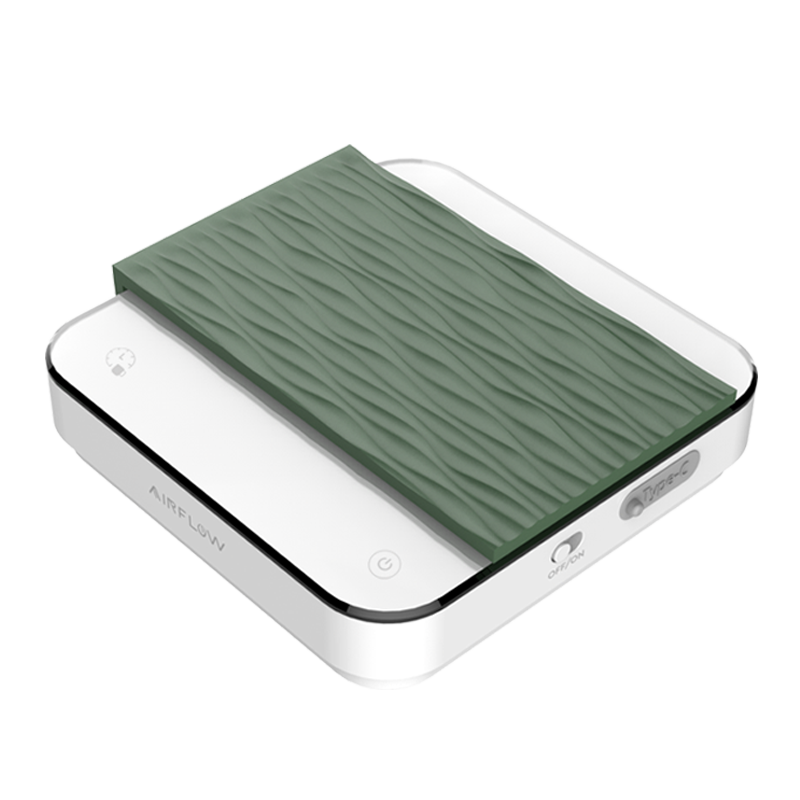
Start with the dose. The Airflow coffee scale reads to 0.1g, has a timer, USB-C charging, and three modes — pour-over, espresso, and auto. Weighing the dose first is what makes every later step repeatable: the same dose in, the same drink out.
2. WDT — break up clumps
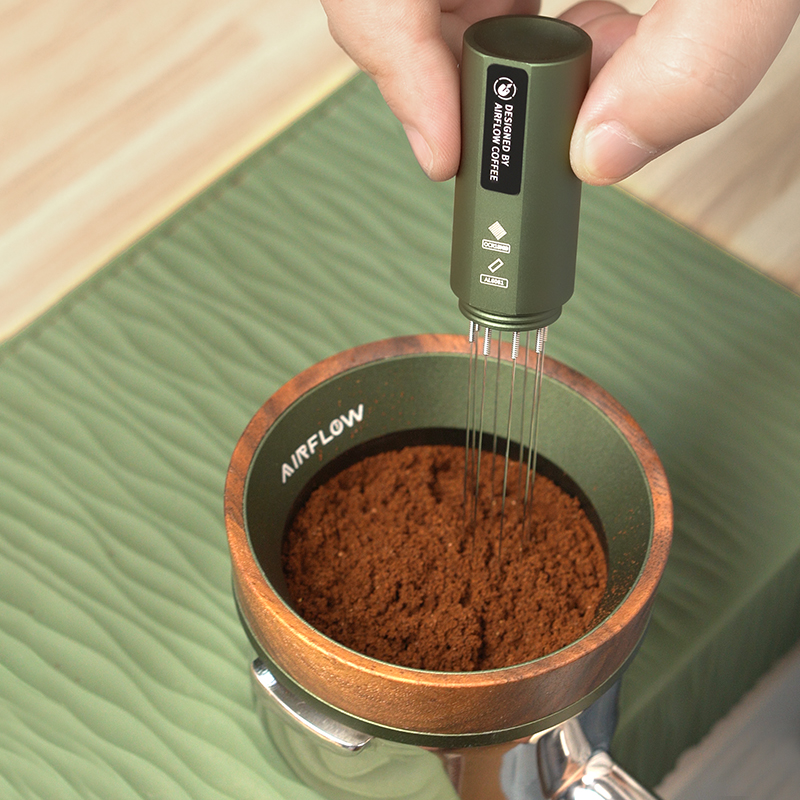
After grinding, use the magnetic WDT to break up clumps and even out the coffee bed. The Airflow WDT has 8 needles, each 0.4mm. A few gentle passes are enough — the aim is an even bed, not a stirred one.
3. Dosing ring — keep the coffee in the basket
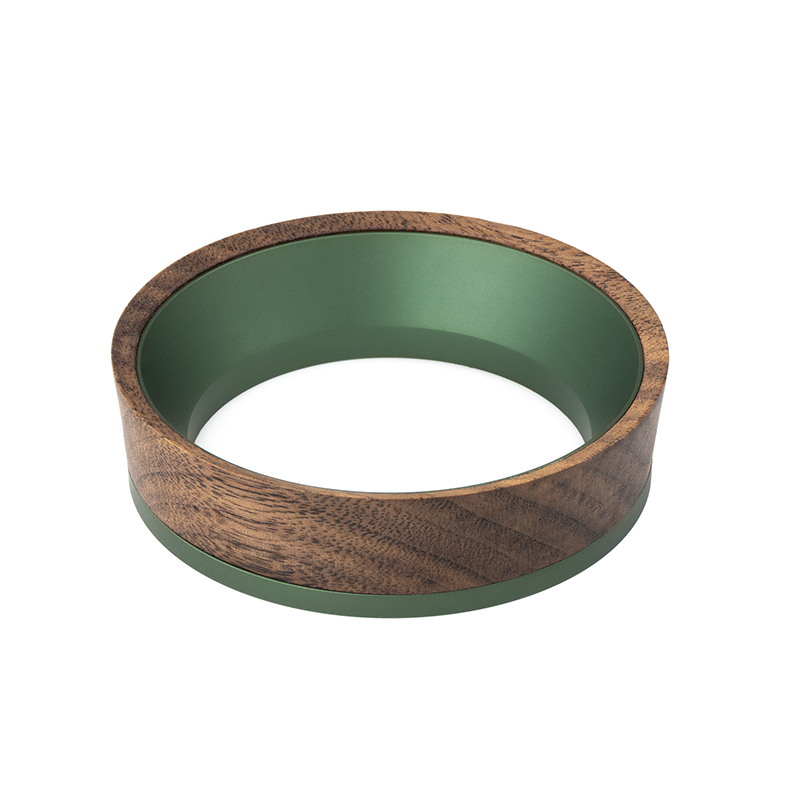
Fit the magnetic dosing ring before you distribute. It has a 73mm wide opening and 6 magnets, and does not fall when flipped, so coffee stays in the basket instead of on the counter. This is the step that keeps the bar clean and the dose in the cup.
4. Distributor — level the bed
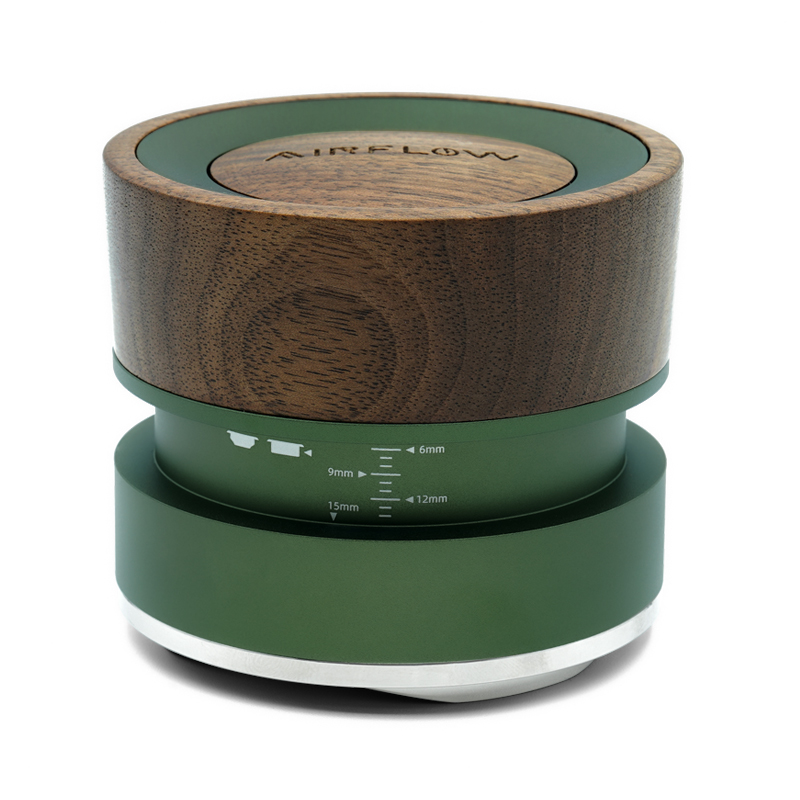
Use the gravity-adaptive distributor to level the coffee bed. It is 58.5mm, with a 9-face plate, a 7.79° angle and 8mm depth, and it reduces channelling. Level first, then tamp — a level bed is what makes the tamp even.
5. Pitcher — steam and pour
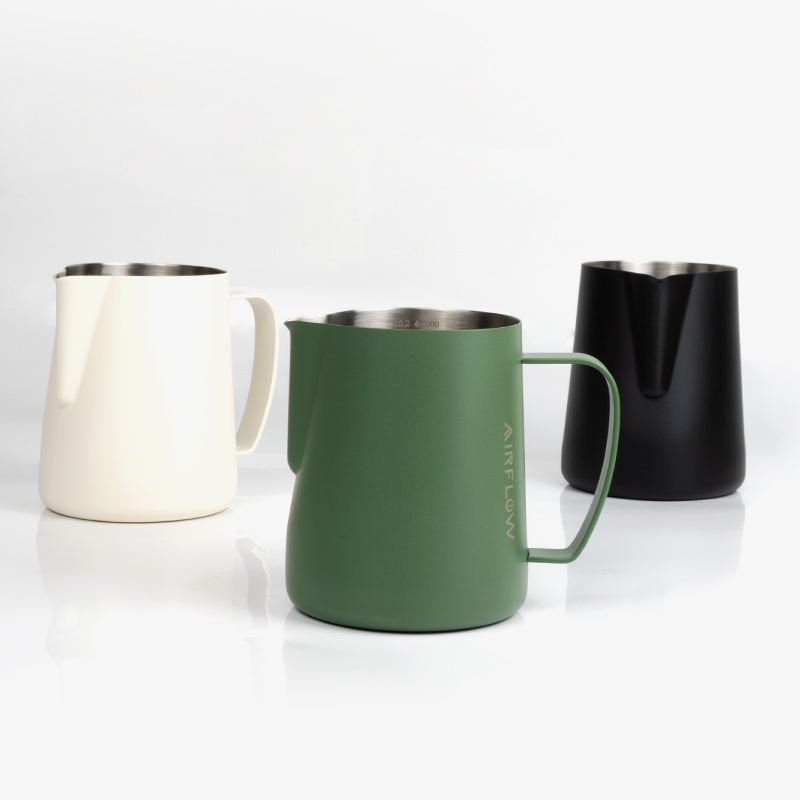
Finish with the milk pitcher. The Airflow pitcher is 304 stainless steel, in 400ml and 600ml. Steam about half a pitcher of milk at a time — about 200ml in a 400ml pitcher, about 300ml in a 600ml pitcher — then pour. For the full pitcher guide, see our article 400ml vs 600ml Milk Pitchers: How to Choose the Right Size for Your Cafe.
How the steps fit together
The order matters because each step fixes what the last one left uneven. Weighing fixes the dose. WDT fixes clumps. The dosing ring keeps the dose in place while you work. The distributor levels the bed so the tamp is even and channelling is reduced. Steaming last keeps the milk fresh for the pour. For the full six-step puck prep version of this workflow, see The 6-Step Puck Prep SOP for Cafes. The set below is the same workflow, with the tools named.
Per-station stocking list
| Tool | Per station | Note |
|---|---|---|
| Coffee scale | 1 | 0.1g, timer, USB-C, 3 modes |
| Magnetic WDT | 1 | 8 needles × 0.4mm |
| Magnetic dosing ring | 1 | 73mm opening, 6 magnets |
| Gravity-adaptive distributor | 1 | 58.5mm, 9-face plate, 7.79° / 8mm |
| Milk pitcher, 400ml | 2 | 304 stainless; one in use, one rinsed and ready |
| Milk pitcher, 600ml | 1 | 304 stainless; for large drinks and two-drink rounds |
For a second station, duplicate the set. Do not share one set between two stations during a rush — the time lost walking for a tool is the time the workflow was meant to save.
Three mistakes to avoid
1. Different tools at different stations
If each station has a different distributor or a different scale, baristas have to relearn the workflow at every station. Keep the set identical at every station.
2. Skipping the scale
Without weighing, the dose drifts from shot to shot, and no later step can fix it. Weigh first, every time.
3. One pitcher for every drink
A single pitcher forces compromises on every drink. Two sizes, in the numbers above, cover single drinks, large drinks, and two-drink rounds without changing the workflow.
FAQ
Do I need all five tools, or can I start with three?
Start with the scale, the WDT, and the distributor if you must start small — those three set the dose and the bed. Add the dosing ring and the second pitcher size next; they are the steps that keep the bar clean and the milk right.
Will this set fit my baskets?
Check your basket size first — 51mm, 54mm, and 58mm are the common sizes. The Airflow distributor is 58.5mm, and the dosing ring has a 73mm wide opening. Match the tools to the baskets your bar actually uses.
Can one set serve a chain with several bars?
Yes, if every bar uses the same set in the same layout. That is the point of a set: the workflow travels with the tools, so training and quality stay the same across bars.
Order a set for your cafe or chain
Airflow espresso-prep tools are available as a set or by item. The usual minimum order is 1 carton per item, samples are available first, and most items are in stock. Own-brand supply is the main offer, and OEM/ODM is available. To order or ask for a wholesale quote, contact Airflow through the Contact Us page and tell us the items, sizes, and quantities you need. For the full range, see the Airflow products page.
Frequently asked questions
Which tool should a new bar buy first?
The scale. The dose is the one number every later step depends on, so weighing to 0.1g comes before everything else — see Airflow Coffee Scale: How to Choose a 0.1g Scale With Timer. Then add the WDT and distributor.
Does the set fit 58mm baskets?
The distributor, portafilter and tamper are 58.5mm, made for 58mm baskets. Confirm your basket size before ordering — for the portafilter specifically, see Airflow Bottomless Portafilter: How to Choose the Right Size.
 Coffee Accessories Wholesale: How Distributors Build a Range That Sells
 Airflow Bottomless Portafilter: How to Choose the Right Size and Use It Without the Mess
 Airflow Coffee Scale: How to Choose a 0.1g Scale With Timer for Espresso and Pour-Over
How to Test Espresso Tools Before a Wholesale Order: Samples, Trial Orders and the First Carton