
Airflow Bottomless Portafilter: A Two-Year Development
"Any update on the portafilter?"
For two years, that was the most common message in our inbox.
We started the project in 2024. Everyone wanted it sooner. For a long time, our honest answer was the same: not yet.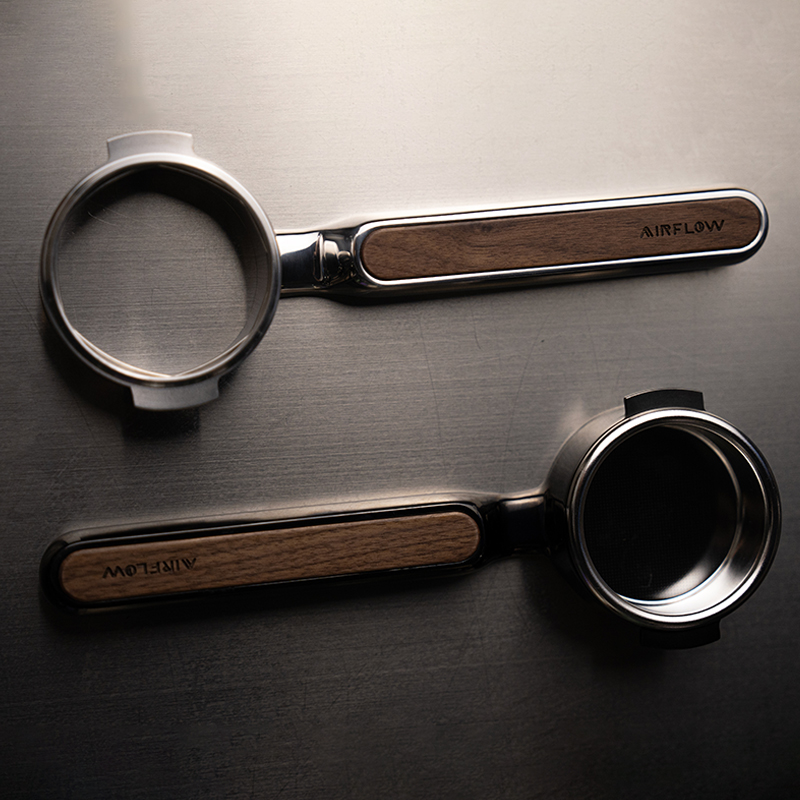
WHY IT TOOK SO LONG
Most bottomless portafilters are a body and a handle. On paper, that's not a complicated object.
In practice, almost every part of it decides whether the tool is worth owning:
The base has to be genuinely flat, not "close enough". Tamp on a base that isn't, and the puck compresses unevenly — you get channeling, and you spend the rest of the shot wondering what went wrong.
The seat for the basket has to be exact. A basket that doesn't sit true leaks, no matter how good the machine behind it is.
The thread has to feel right in the hand — not tight enough to fight you, not loose enough to worry you.
The finish has to survive being used. Chrome that looks perfect in a photograph often doesn't after three months on a busy bar.
And the whole thing has to sit on the counter without falling over. Which sounds trivial until you've held a portafilter steady with one hand while tamping with the other, every morning, for years.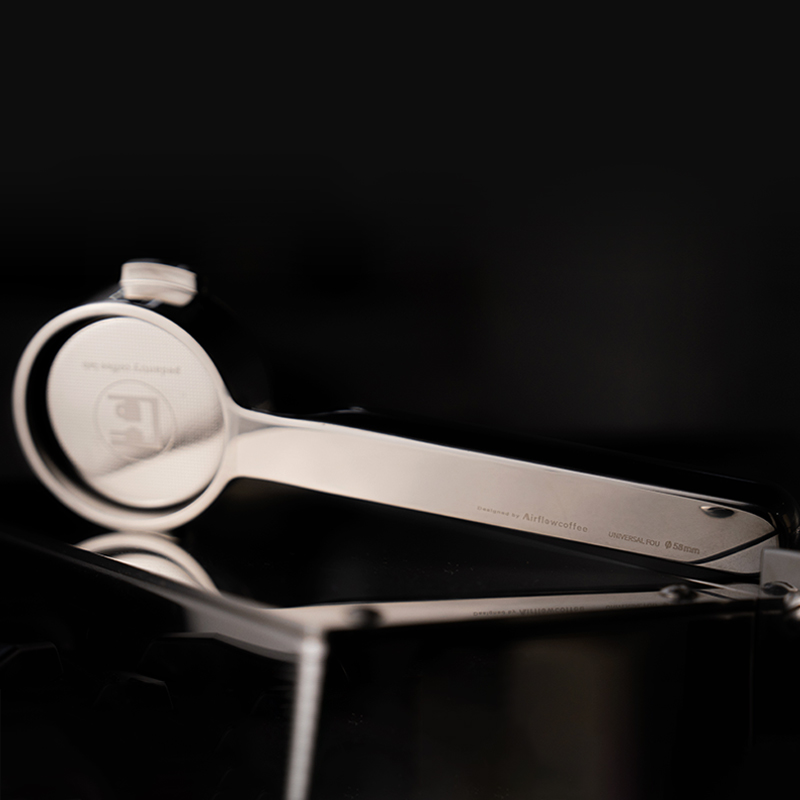
THE FLAT MIRROR BASE
The central decision was the base.
We made it completely flat, with a polished mirror surface. Not a decorative choice — a functional one.
A flat base means the portafilter sits level on the counter by itself. No stand. No holding it against the edge of the bar. You can tamp with both hands, straight down, on a surface that isn't moving.
That single change removes one of the quiet sources of inconsistency in a bar workflow, and it removes it every single time, not just when someone is paying attention.
We also redrew it many times. Some versions looked right in a render and felt wrong in the hand. Some finishes photographed beautifully and scratched within a week. Several prototypes never left the workshop — they were close, but "close" isn't what you want to hand someone who uses the tool a hundred times a day.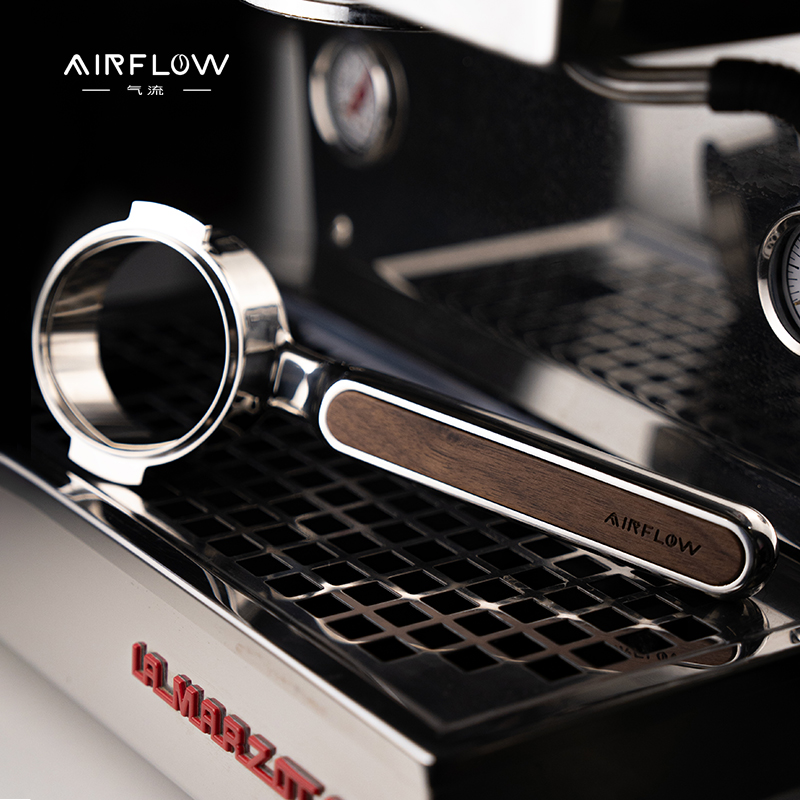
WHAT IT'S MADE OF
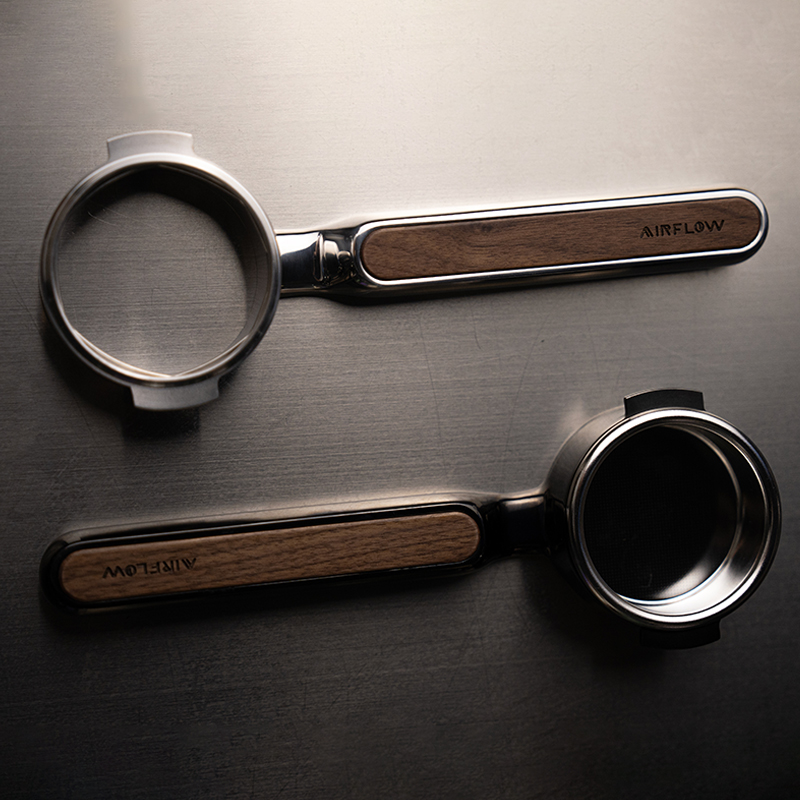
Body: solid food-grade 304 stainless steel.
Handle: North American black walnut.
Dimensions: 230 × 82 × 21 mm.
Weight: approximately 536 g.
It fits E61 group heads and La Marzocco, and works with all standard 58 mm baskets.
The weight is deliberate. A portafilter that's too light feels like a toy in the hand and gives you less feedback through the puck. The one you see here has enough mass to sit still while you work.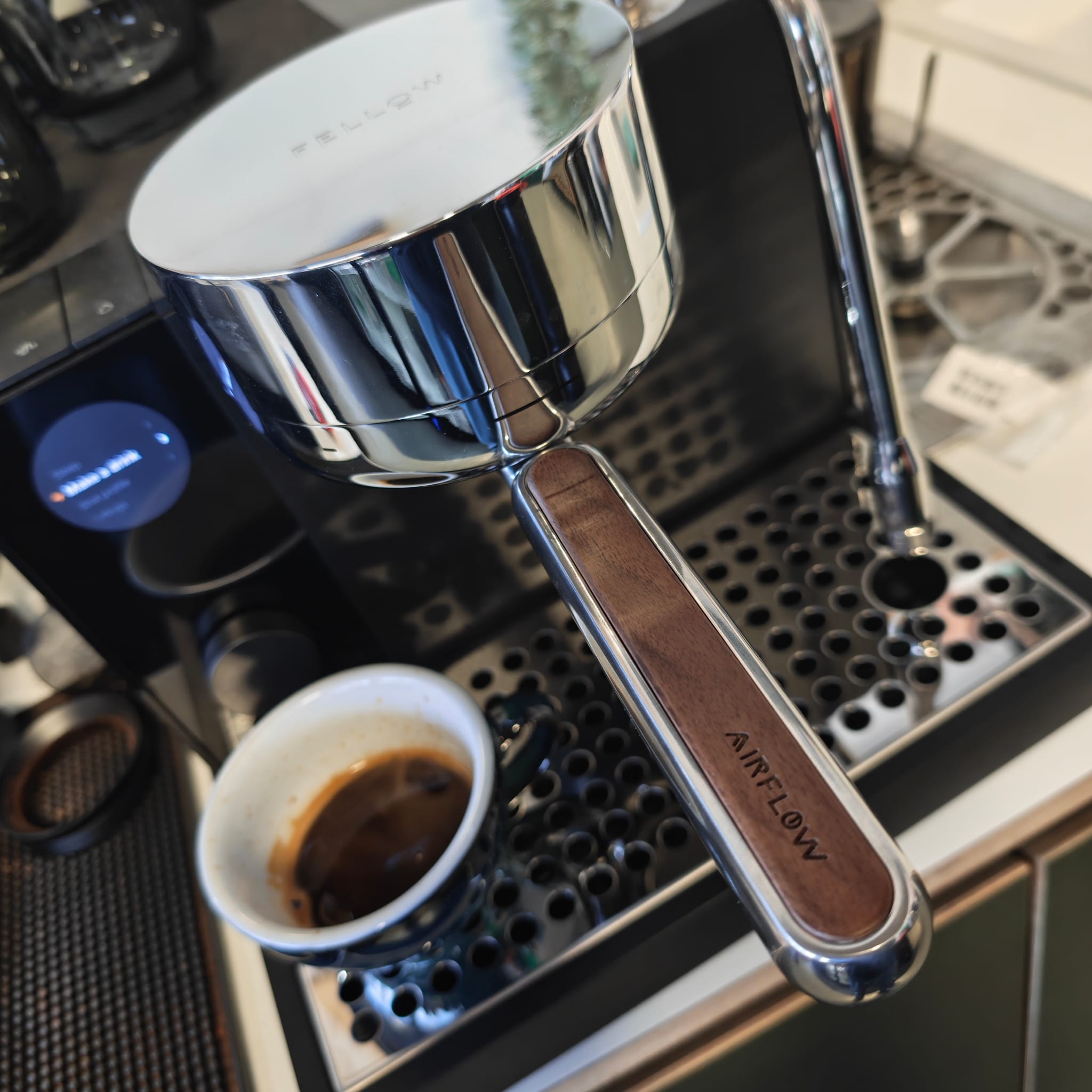
A NOTE ON TIMING
We could have shipped this in year one. There were versions that would have sold.
We didn't, for a reason that has nothing to do with perfectionism: a product released too early doesn't just fail on its own. It teaches your customer not to trust the next thing you make. That cost is far higher than being late.
Our products are sold today through specialist retailers and distributors in Singapore, Australia, Canada and Europe. Those partners put their own reputation next to ours. Sending them something unfinished isn't a small mistake — it's spending their credibility to save our time.
So the portafilter took two years. If it takes another two to get the next product right, it will take two years.
WHERE TO FIND IT
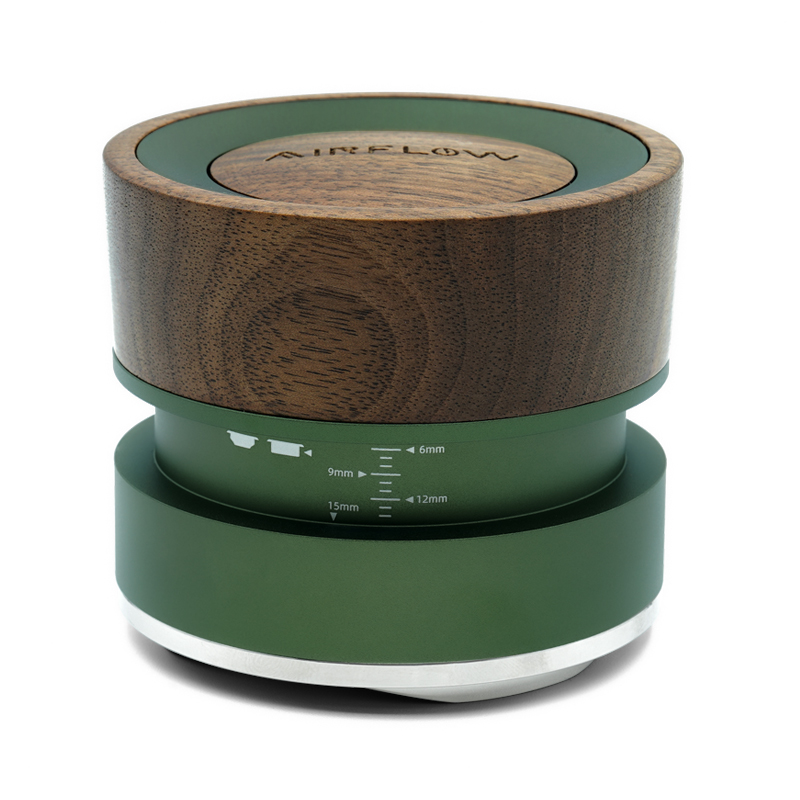
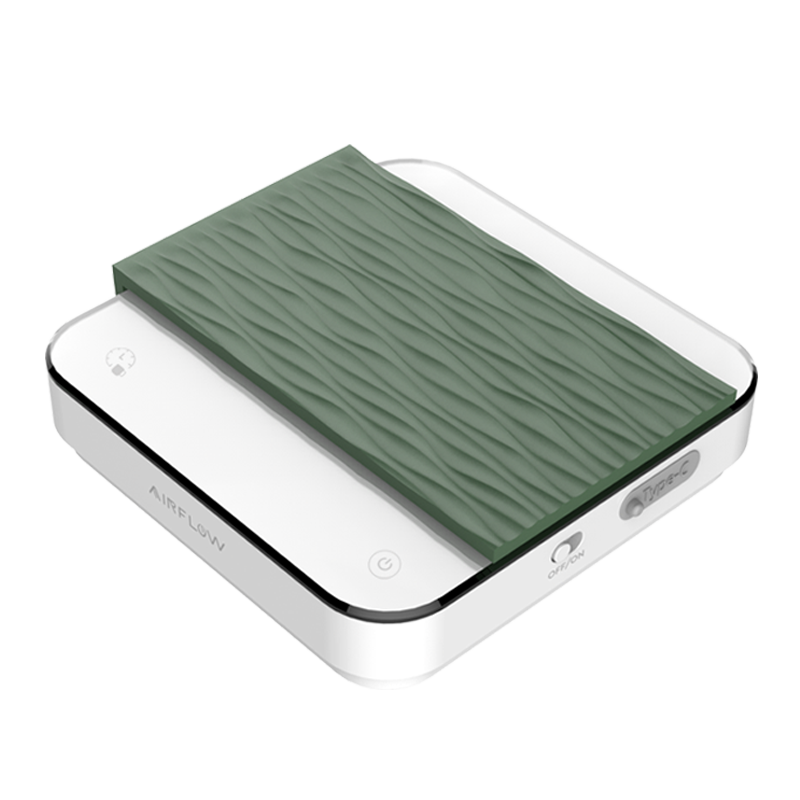
The Flat Mirror portafilter is available now, alongside our distributors, WDT tools, tampers, dosing rings and coffee scales.
If you're a distributor or a specialty retailer building out an espresso accessories range, we'd rather have a conversation than send you a catalogue. Tell us what's missing from your shelf.
Contact: [email protected]
 Coffee Accessories Wholesale: How Distributors Build a Range That Sells
 Airflow Bottomless Portafilter: How to Choose the Right Size and Use It Without the Mess
 Airflow Coffee Scale: How to Choose a 0.1g Scale With Timer for Espresso and Pour-Over
How to Test Espresso Tools Before a Wholesale Order: Samples, Trial Orders and the First Carton